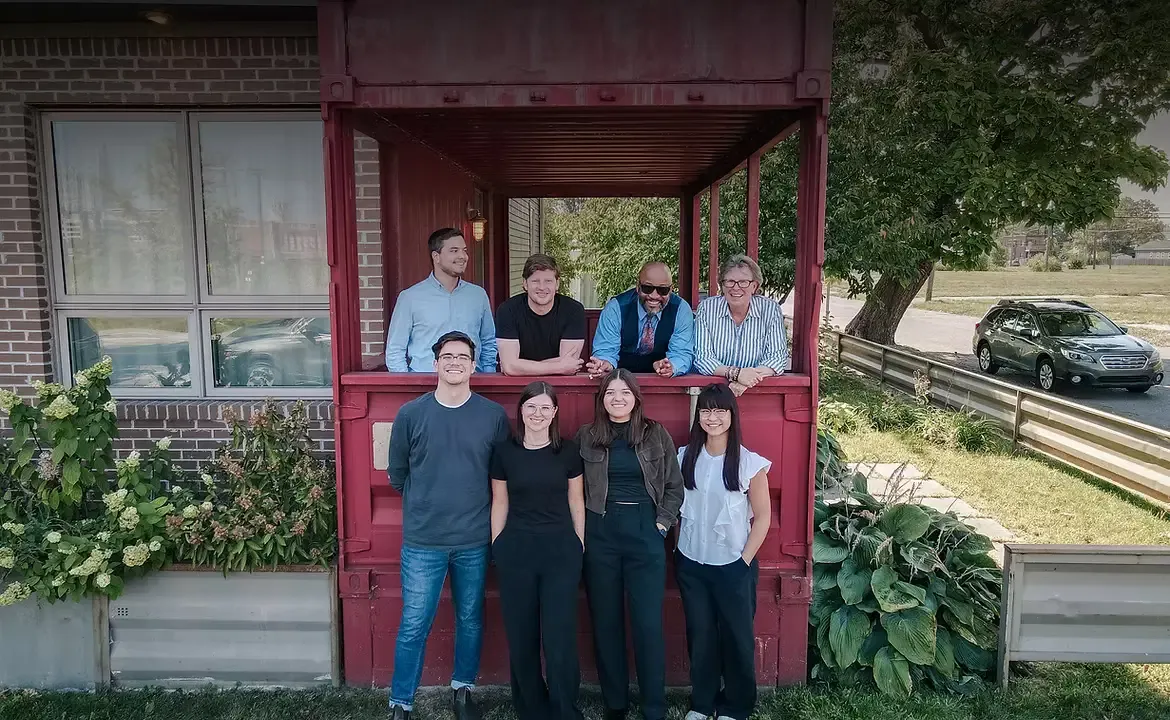
The air in Detroit has always smelled like grit and progress, but for decades, the boardrooms of the city's real estate world smelled like stale cologne and mahogany. Leslie Horn, the CEO and Founder of Three Squared, Inc., didn't just walk into those rooms; she redesigned the floor plan using corrugated steel and a pace that makes traditional developers look like they’re stuck in a perpetual zoning meeting.
As part of the Breaking Ceilings Breaking Ground podcast, we’re spotlighting the "Architect of Innovation." Leslie isn't interested in "leaning in" to a broken system. She’s standing up, buying in, and building the future of North American housing: one container at a time.
The Blueprint: Thinking With Your Fingers
Most developers start with a spreadsheet. Leslie Horn starts with a problem and a philosophy she calls "thinking with her fingers."
In the mid-2000s, Leslie was a powerhouse developer with a multi-million-dollar portfolio in Detroit. Then came the 2008 crash. While the rest of the industry was mourning the death of the traditional rehab model, Leslie was pivoting. When a contractor suggested shipping containers: those massive, rusted boxes cluttering the ports: she didn’t just see scrap metal. She saw a modular revolution.
She stopped asking for a seat at the old table and started building a new one, literally. By 2009, she secured the first-ever U.S. approval for a shipping container apartment complex. That wasn't just a win for Three Squared; it was a shot across the bow for the entire industry. It proved that innovation doesn't need permission: it needs persistence.
Cargo Architecture: The Triple Bottom Line of Speed
At Breaking Ceilings Breaking Ground, we focus on the mechanics of development because passion doesn’t pour concrete. Leslie’s success is rooted in the Triple Bottom Line: social impact, environmental resilience, and economic return.
Modular construction isn't just a "cool" aesthetic; it's a high-performance solution to the housing crisis. Leslie’s firm has designed over $300 million in projects by mastering the art of Steel and Speed.
- Speed: We’re talking about three-story residential models erected in 6 hours and 15 minutes. In an industry where "delays" are treated like a weather report, Leslie is the storm.
- Scalability: By shifting the majority of work offsite into a controlled fabrication environment, Three Squared minimizes the chaos of the job site.
- Energy Efficiency: These aren't just boxes; they are high-performance thermal envelopes. Modular steel units offer durability and efficiency that traditional stick-built structures can't touch.
Leslie has moved past the "repurposed box" novelty to lead an architectural, design, and fabrication firm that is codifying the future. Three Squared’s work in Detroit’s North Corktown: the Trumbull/Model Center: didn’t just provide housing; it informed the 2023 International Building Code. Leslie didn't just break a ceiling; she wrote the manual on how to build the roof.
Innovation Deep Dive: The Economic Power of Prefab and Mass Timber
This is where Leslie Horn’s playbook gets even sharper. The economics are finally catching up to what innovators like Leslie have been saying for years: if we want attainable housing at scale, we need better systems, not slower sentiment.
The White House 2026 Economic Report put real weight behind modular construction as a national response to the housing shortage, citing timeline reductions of 30–50% and cost savings north of 20%. That is not niche experimentation. That is policy-level validation for an offsite construction model Leslie has been pushing from Detroit long before it was fashionable.
The market is moving, too. The North American modular construction market is hitting roughly $26.2 billion in 2026, which tells us this isn’t a boutique lane anymore. It’s becoming core infrastructure for how cities deliver housing faster, tighter, and with more discipline around labor, financing, and execution.
And then there’s mass timber, the wood side of Leslie’s “Steel and Wood” future. Current 2026 trend lines point to productivity gains of up to 8%, with per-employee value creation estimated between $2,000 and $6,000 annually. In development terms, that means smarter assembly, less waste, cleaner sequencing, and stronger project economics across the board.
That matters because Leslie’s work at Three Squared has never been about chasing aesthetics. Yes, her signature Cargo Architecture turned shipping containers into a serious development typology. But the bigger story is that she’s building a toolkit. On one side, steel modular systems that compress schedules and unlock repeatability. On the other, mass timber projects like Cochrane Commons, where wood becomes a performance strategy, not a design flourish.
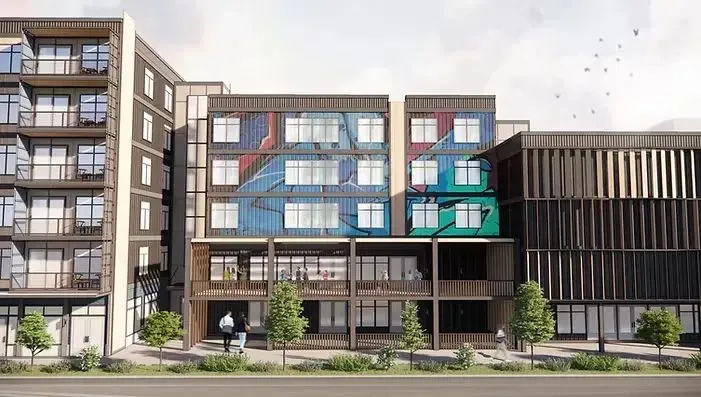
For cities like Detroit, these innovations are essential. “Steel and Wood” is not a mood board. It’s a mechanism for scaling attainable housing in urban markets where construction costs, labor constraints, and delivery risk can kill good projects before they ever lease up. Leslie is proving that prefab and mass timber are not side conversations in the future of housing. They are the future of housing.
Educate and Amplify: Rebuilding the Room
The mission of Breaking Ceilings Breaking Ground is to Educate and Amplify. Leslie’s zero-apology approach to Detroit development is exactly the kind of energy we’re bringing to the airwaves this June. When Leslie talks about "rebuilding the room," she means creating an industry where modular isn't an "alternative": it’s the standard. Where women aren't "guests": they are the owners.
By moving from a development-only model to a service-provider powerhouse (design, fabrication, and project management), Leslie has ensured her impact is scalable. She’s not just building one building; she’s empowering dozens of other developers to adopt the modular creed.
Inside Three Squared: Culture as Construction Strategy
At Three Squared, the corporate culture isn’t a poster on the wall. It’s an operating system. The firm runs on four core values: collaboration, humility, optimism, and excellence. That combination gives the company its edge. Collaboration keeps silos from calcifying. Humility leaves room to learn. Optimism keeps the team moving through friction. Excellence makes sure the work actually performs when it hits the street, the site, and the spreadsheet.
That culture shows up in a clear team-first mindset and a curious, sleeves-rolled-up approach to problem-solving. At Three Squared, innovation isn’t treated like a lightning strike; it’s treated like a discipline. Ask better questions. Test faster. Stay open. Get uncomfortable. Then build anyway.
Leslie leads a cross-disciplinary team that pulls together engineering, real estate, marketing, and legal under one roof to deliver integrated solutions instead of disconnected parts. That matters. In development, the handoff is where good ideas go to die. Leslie has built a model where the disciplines talk early, challenge each other often, and stay aligned around execution.
And just as importantly, Three Squared keeps its eyes on the community. The work is not just about faster delivery or smarter systems; it’s about engaging the people who will live with the outcome. That commitment to community engagement, paired with a willingness to embrace discomfort in the name of continuous innovation, is what makes the company more than a modular pioneer. It makes Three Squared the kind of place that doesn’t just adapt to the future of housing. It helps author it.
From Mic to Page: The Upcoming Book
The conversation we’re having with Leslie on the June 22nd podcast is more than just a 45-minute audio clip. It’s a foundational piece of our upcoming book.
Co-founders Molly McCabe and Jill Ferrari are capturing these "aha!" moments: the grit of the 2008 pivot, the technical hurdles of the 2009 approval, and the sheer audacity of building $300M in projects: to create a permanent record. We are documenting a movement.
We aren't just talking about the "what." We’re talking about the "how." How to navigate financing for modular projects. How to challenge outdated building codes. How to stand up and buy in when everyone else is telling you to stay in your lane.
Standing Up and Buying In
Leslie Horn’s journey reminds us that the most durable structures aren't made of wood or brick: they’re made of vision and steel. As we prepare for our podcast, Leslie stands as a beacon for what happens when you stop asking for permission and start ordering the containers.
The "Architect of Innovation" has already rebuilt the room. Now, she’s helping us build the rest of the city.
Join the MovementDon't miss Leslie’s full episode on the Breaking Ceilings Breaking Ground podcast, dropping June 22nd. Subscribe now and stay connected as we turn these conversations into the definitive guide for women in real estate development. Visit our website for more stories of impact.