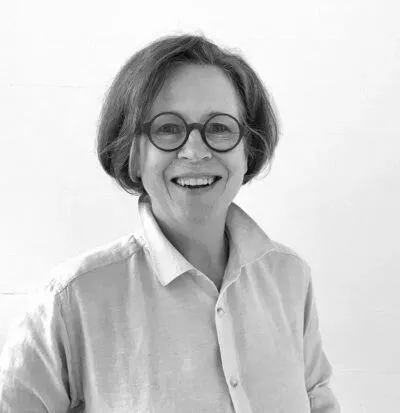
Belinda Watts does not believe in waiting for permission: or precedent.
“I don’t particularly like taking no for an answer,” she says. “And I’m not very big on precedent.”
That independent streak has carried her from a sheep farm in Australia to New York’s most complex design and development projects. It led her through an Australian architecture degree, a scholarship to Pratt Institute, work with innovative tensile and modular structures, and a 25-year career as a project director at Gensler.
Then, at 67, Belinda launched Row Partners LLC, a certified woman-owned owner’s representative and project management firm serving commercial, residential, and cultural clients throughout New York City and the tri-state region.
Some people might call that a late-career pivot.
We call it The Third Ascent.
The Translator in the Room
Belinda’s work begins with a deceptively simple job: make complicated projects understandable.
“I often think of myself as the translator,” she explains.
Her clients may be sophisticated investors, property owners, institutions, or corporate leaders. They know what they want to accomplish. They may even know the financial and strategic case for doing it. But construction, design, insurance, permitting, and real estate each come with their own dense dialect.
Belinda translates the arcane language of the built environment into decisions clients can act on. At the same time, she brings a design eye and technical capacity that can be difficult to find in a conventional project management model.
That combination is the Row Partners advantage: clarity without oversimplification, technical rigor without unnecessary theater, and a steady hand when a project inevitably encounters friction.
Row Partners describes its approach as bringing “clarity, consistency and equanimity to a complex process through proactive and thoughtful leadership.” Belinda puts that philosophy to work across a remarkably varied project portfolio.
Four Projects. Four Different Problems to Solve.
One of her current assignments is a roughly 400-unit cooperative on 14th Street between Fifth and Sixth Avenues. The property had a long retail frontage that needed to be reclaimed and right-sized.
The project created a continuous ground-floor facade and reorganized the retail band into spaces that better fit the market. The result was not simply a cleaner storefront strategy. It created a stronger financial and operational platform for the building.
Improved retail income is helping fund new resident amenities, including:
- A lounge
- A children’s playroom
- A fitness room
- Bike storage
- Better package facilities
This is development as a connected system. Retail supports the building. The building supports its residents. The street benefits from active, occupied frontage. The economics and the community value reinforce each other.
That is the Triple Bottom Line in practice: financial performance, resident experience, and a healthier urban environment moving in the same direction.
Belinda is also managing an exterior repair project for a Brooklyn condominium where cracks in the EIFS system have allowed water to damage interior units. The project involves technical investigation, insurance complexity, and the careful coordination required when the building envelope fails and the consequences show up inside people’s homes.
For a French private equity client preparing to move into Carnegie Hall Tower, she is leading pre-build work and serving as the bridge between the client and the many specialized voices involved in delivery.
And on a Fifth Avenue flagship retail store, a large contractor has engaged her for quality assurance. She describes the role simply: “another pair of eyes.”
In development, another pair of experienced eyes can save time, money, and a great deal of avoidable stress.
From the Sheep Farm to the Skyline
Belinda grew up on a sheep farm in Australia, in a town of approximately 50 people. She attended a tiny school and jokes that she was related to half the town.
It was a close-knit place, but not necessarily an expansive one. As Belinda describes it, her grade consisted of three people - her boyfriend and her cousin.
Her response was not to accept the boundaries handed to her.
She earned a Bachelor of Architecture in Australia and later won a scholarship to pursue a master’s degree at Pratt Institute. Her decision to come to New York around 1980 was partly strategic and partly adventurous.
When asked why she chose New York, she offered a refreshingly candid answer: she considered where she wanted to go have an adventure: and where she wanted to go party.
The city gave her both. It also gave her demanding work, tough lessons, and a platform for building an extraordinary career.
Before joining Gensler, Belinda worked in firms with significant design reputations, including Raphael Viñoly’s office. She worked with tensile structures and modular structures at a time when those approaches were far from mainstream development shorthand.
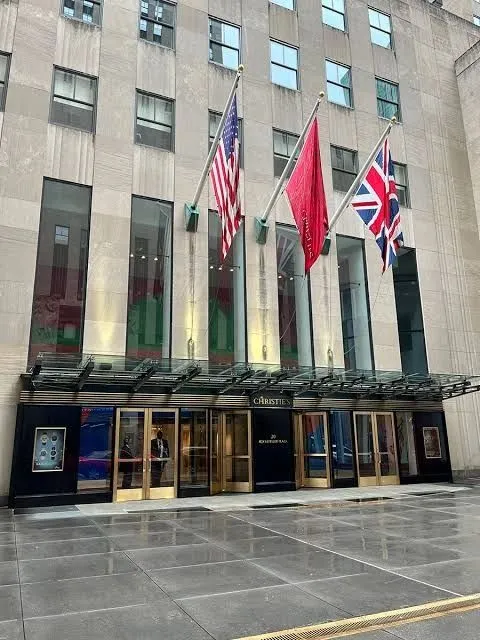
She eventually spent 25 years at Gensler, building the project leadership experience that would later become foundational to Row Partners.
The résumé matters. So does what she learned along the way: how to assemble teams, manage risk, protect quality, read a drawing set, understand a budget, and keep a project moving when the path forward is not obvious.
Care Is a Development Strategy
Belinda’s philosophy becomes especially powerful when she talks about interiors.
Most people think of architecture as the shell, she says. But the interior architecture: the way people experience, use, and care for a place: deserves equal attention.
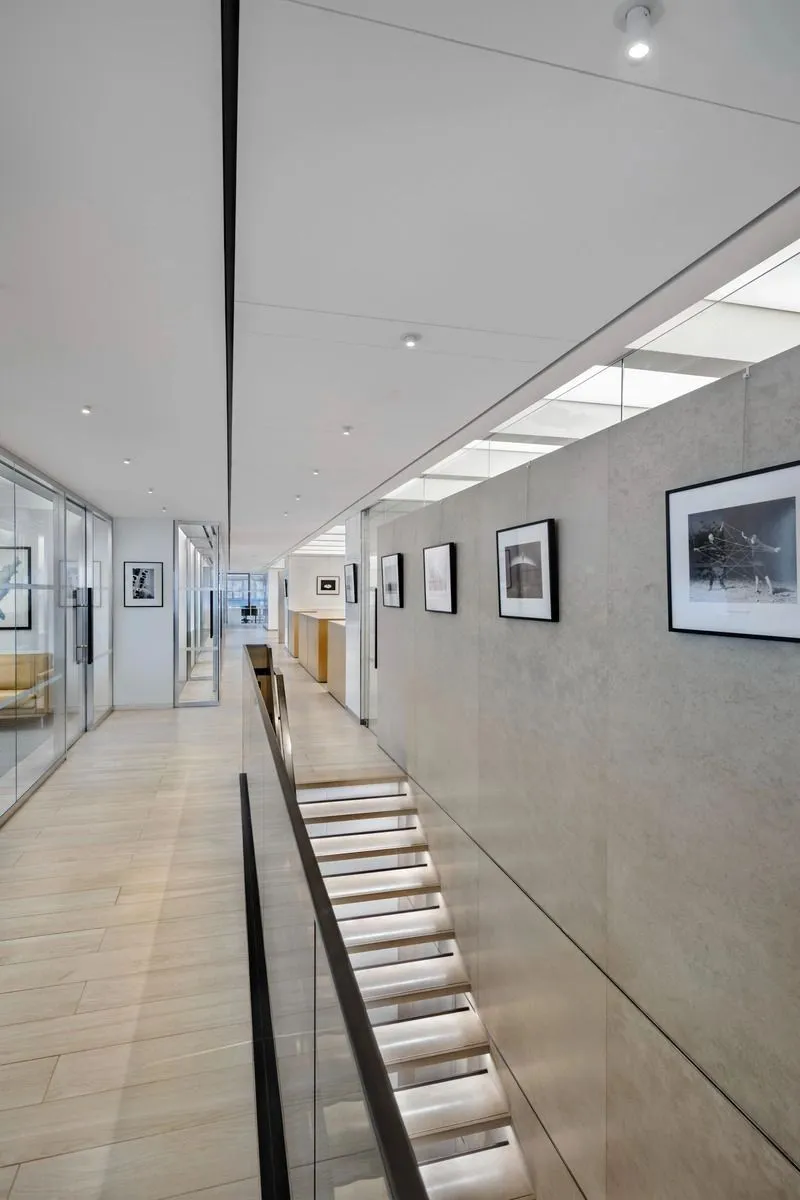
“It doesn’t have to be fabulous design,” Belinda says. “But it should be cared for design.”
That means somebody thought about the space. Somebody tended it, mended it, and made a plan for it.
Her small-scale development work makes that philosophy personal. Belinda owns a two-family property in Brooklyn and a four-family property upstate. In the upstate building, she is converting student rentals into market-rate housing, renovating units one at a time as tenants move out.
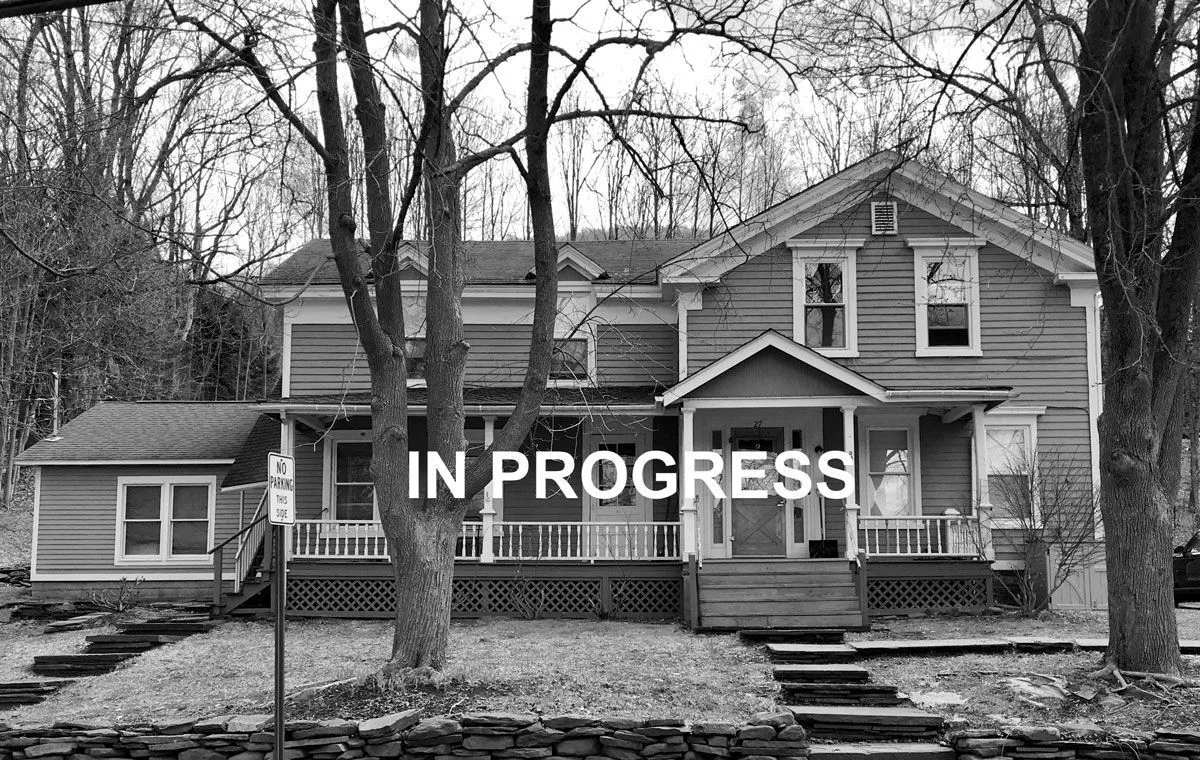
The goal is not luxury for luxury’s sake. It is durability, dignity, and intentionality.
A cared-for rental attracts tenants who recognize the standard and respect the space. A well-maintained building can improve the daily experience of the people who live there. The return is measured in rent, retention, pride, and long-term asset performance.
That is not decorative thinking. That is development thinking.
It is also where the spreadsheet meets reality. Belinda says she did not fully understand “penciling out” until she owned property herself. In the upstate market, where construction costs can approach $2,000 per square foot, a rental housing developer may need to find a way to build closer to $200 per square foot—especially when achievable rents are around $1,000 a month. The economics demand serious creativity.
That is the work. The vision matters, but so do the numbers.
Retail Still Builds the Street
Belinda has watched retail evolve over decades. She has seen online shopping change consumer behavior and COVID-19 expose how much street life depends on people moving through physical spaces.
“The one thing that online shopping and COVID taught us is the importance of retail in activating the street,” she says.
Retail is not only about transactions. It is about movement, visibility, curiosity, and shared experience. It gives people a reason to arrive and linger.
The 14th Street co-op project demonstrates that principle. The retail spaces were fully leased within 12 months. Belinda credits two familiar fundamentals: location and quality.
“Location, location, location,” she says. “And you’ve got to have a quality product.”
That may sound straightforward. It is also easy to forget when a project becomes consumed by logistics, schedule pressure, and financing constraints.
A successful street-level strategy requires more than filling empty storefronts. It requires understanding what people want to experience, how a facade contributes to a block, and how the relationship between retail and residential uses can improve the entire property.
Belinda sees the long arc. Neighborhoods change. Retail changes. Buildings must adapt without losing their connection to the people around them.
The Third Ascent Starts at 67
Belinda launched Row Partners in 2020. She did so after an accomplished corporate career, not before it.
The transition from a large firm to entrepreneurship required more than finding clients. It required building systems from scratch: accounting, technology, file-sharing, project administration, onboarding, and the countless operational details that a corporate structure quietly handles in the background.
“I didn’t realize the efficiency of the corporate structure,” Belinda admits.
Then came the work of creating her own structure. She describes the experience as having the rug pulled out from under her feet, followed by the discipline of patiently putting it back together.
That patience is not passive. It is strategic.
Belinda says, “I have big aspirations, but I had pretty small goals: if I can get through this year, I’m good.”
Jill Ferrari called it perfectly: aspiring big but small plans.
That is a powerful operating model for anyone entering development, launching a firm, or making a major career change. Big aspirations provide direction. Small, manageable goals create momentum.
The Third Ascent is not a farewell tour. It is a beginning.
Development Through Your Own Lens
Belinda’s advice to emerging developers is direct: development does not have to mean a big, ground-up project.
Look at the opportunities in front of you. A two-family property counts. A four-family property counts. A renovation, adaptive reuse project, or small housing development can build the same muscles: acquisition, financing, design, construction, leasing, operations, and stewardship.
“It doesn’t have to be ground up, 25-unit,” she says. “Look at it through your own lens.”
That lens matters. Your market may be a small town. Your asset may be a neglected building. Your strategy may involve modular construction, a careful renovation, or a partnership that makes the financing work.
The point is not to imitate someone else’s scale. The point is to start building the scale that makes sense for your experience, capital, community, and ambition.
Belinda is still looking ahead. Row Partners is seeking the right project manager or cohort to join the firm, new projects and opportunities for small-scale housing development in upstate New York.
You can learn more through Row Partners LLC, connect with Belinda on LinkedIn, and explore the work of the Women’s Development Collaborative, where Belinda has shared insights on adaptive reuse, capital, and becoming a developer.
From Conversation to Community
Belinda’s episode of the Breaking Ceilings Breaking Ground podcast is part of a larger record we are building together.
These conversations will culminate in our upcoming book, capturing not only who these women are, but how they made decisions, managed risk, built teams, secured financing, navigated complexity, and moved projects from idea to reality.
Belinda’s story belongs in that record because it expands the definition of when a development career can begin: and what development can look like.
She is an architect, owner’s representative, project director, landlord, translator, systems builder, and small-scale developer. She is also a woman who launched a new firm at 67 and kept moving forward.
The next ascent is already underway.
Stay connected to the movement through Breaking Ceilings Breaking Ground and join us as these stories move from the microphone to the book: and from the book into the hands of the next generation of builders.